Article • Water Baptism
Noah Was Not Saved by Water
Noah was righteous by faith before the flood ever fell. The water judged the wicked — it did not save him. Why 1 Peter 3:21 cannot teach baptismal salvation.
“By faith Noah, being warned of God of things not seen as yet, moved with fear, prepared an ark to the saving of his house; by the which he condemned the world, and became heir of the righteousness which is by faith.”
Hebrews 11:7 (KJV)
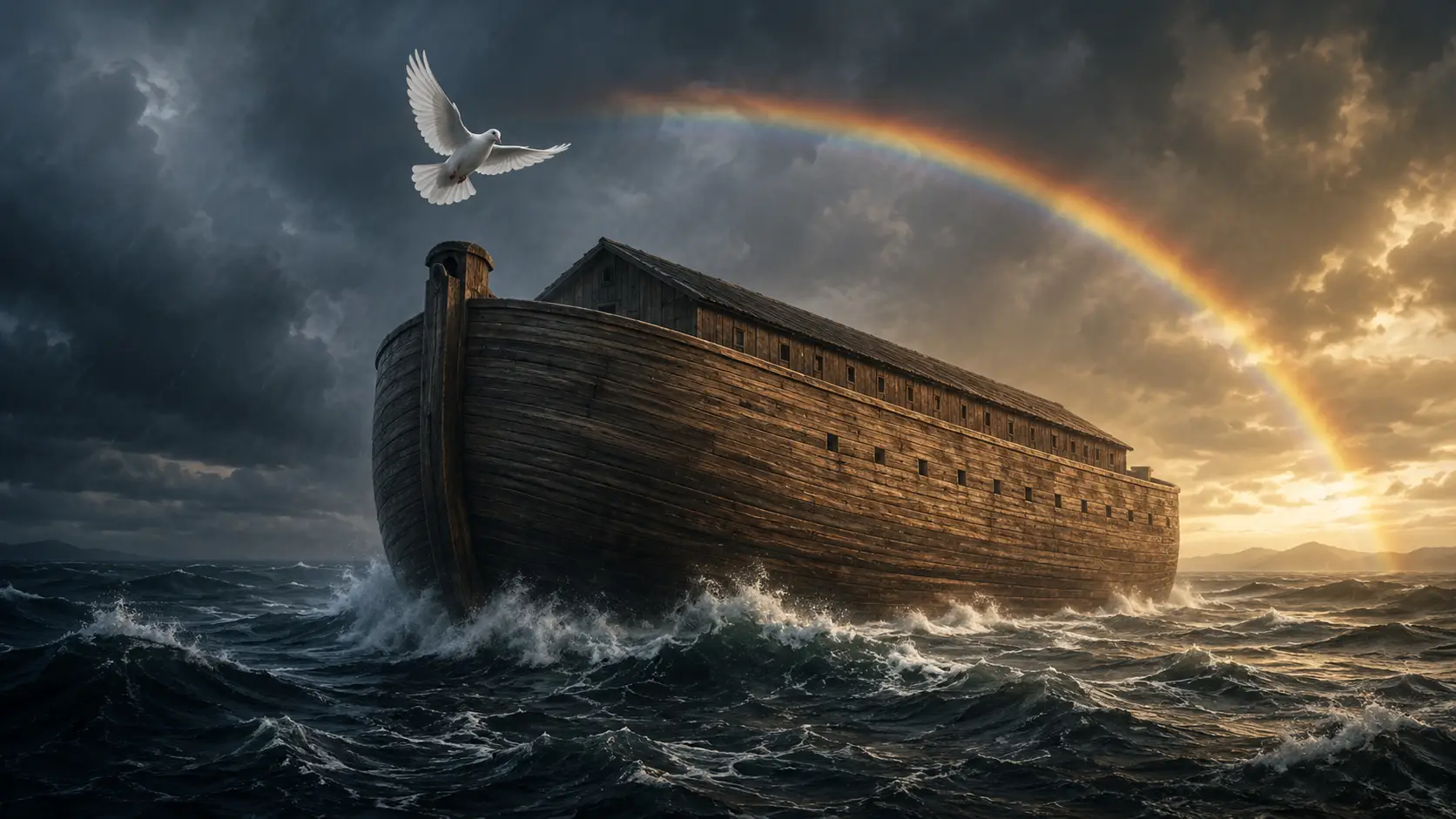
Peter never taught that water saved Noah. Before the flood began, Noah was already declared righteous and blameless before God. Genesis 6:9 says, “Noah was a just man and perfect in his generations,” and Genesis 7:1 records God saying, “for thee have I seen righteous before me in this generation.” The Hebrew words are tsaddiq, meaning righteous or upright, and tamim, meaning blameless or complete. Noah was not made righteous by entering floodwater. He entered the ark because he had already believed God.
Hebrews 11:7 explains the order clearly: “By faith Noah, being warned of God of things not seen as yet, moved with fear, prepared an ark.” Noah acted because he believed God, and he “became heir of the righteousness which is by faith.” Faith came first. The ark was prepared through obedient faith before a single drop of judgment fell.
The floodwater did not cleanse or save Noah. It destroyed the unbelieving world. Genesis 7:21–23 says that every living thing outside the ark died, while “Noah only remained alive, and they that were with him in the ark.” Second Peter 2:5 says that God “saved Noah” while bringing in “the flood upon the world of the ungodly.” Second Peter 3:6 says the world that then was, “being overflowed with water, perished.” Water was the instrument of judgment, not the source of Noah’s salvation.
God Himself provided the ark as the place of safety. In Genesis 6:18, God told Noah, “thou shalt come into the ark.” Genesis 7:16 then says that after Noah entered, “the LORD shut him in.” Noah was preserved because God placed him safely inside the ark that he had prepared by faith. The water lifted the ark, but that same water killed everyone outside it. It makes no biblical sense to call the instrument that destroyed the world Noah’s spiritual savior.
This is exactly the background of 1 Peter 3:20–21. Peter says that “eight souls were saved by water.” They were not saved by the water as though it cleansed their sins. They were carried safely through the judgment because they were inside the ark. Peter then immediately prevents anyone from treating baptismal water as a saving cleanser by saying baptism is “not the putting away of the filth of the flesh.” He locates salvation in “the resurrection of Jesus Christ,” not in the physical water.
The comparison is therefore clear. The flood separated the righteous from the condemned, just as baptism publicly identifies a believer with the crucified and risen Christ. But the saving power is not in the water. Noah was righteous by faith before the flood, preserved in the ark during the flood, and delivered from judgment by God. In the same way, believers are saved through faith in Jesus Christ and His resurrection, not by baptismal water.
Peter never taught that water saved Noah, washed away his sins, or made him righteous. He called Noah “a preacher of righteousness” in 2 Peter 2:5 because Noah already belonged to God before the judgment came. The water judged the wicked. God saved Noah through faith and preserved him in the ark. Therefore, 1 Peter 3:21 cannot honestly be used to teach that water baptism cleanses sin or completes the saving work of Jesus Christ.
Salvation is only through a personal relationship with God the Father by grace through faith in His Son, Jesus Christ. At the moment of saving faith, the believer is instantly and permanently indwelt by the Holy Spirit — who regenerates, seals, leads, guides, empowers, and sanctifies in their walk with God.